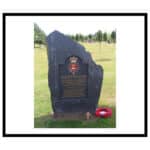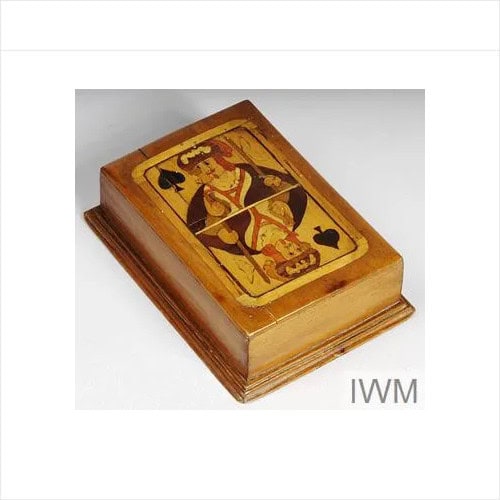
2208 Pte A Cox, 3H
The Great War 1914-18. Awarded the 1914 Star, British War medal and Victory medal.
Arthur was ‘Officially reported as missing and unofficially reported as a Prisoner of War’ on the 14th of December 1914.
Arthur was indeed captured between Lille and Ypres on the 20th of October 1914.
He returned to England on the 11th of May 1918
Chronological Timeline of Captivity
October 1914 – June 1915
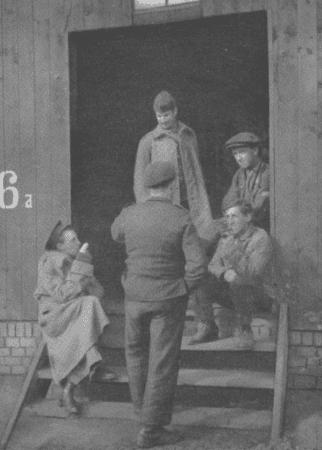
GÖTTINGEN
Cox worked in stone quarries under harsh discipline; one prisoner was shot dead for refusing work.
June – July 1915
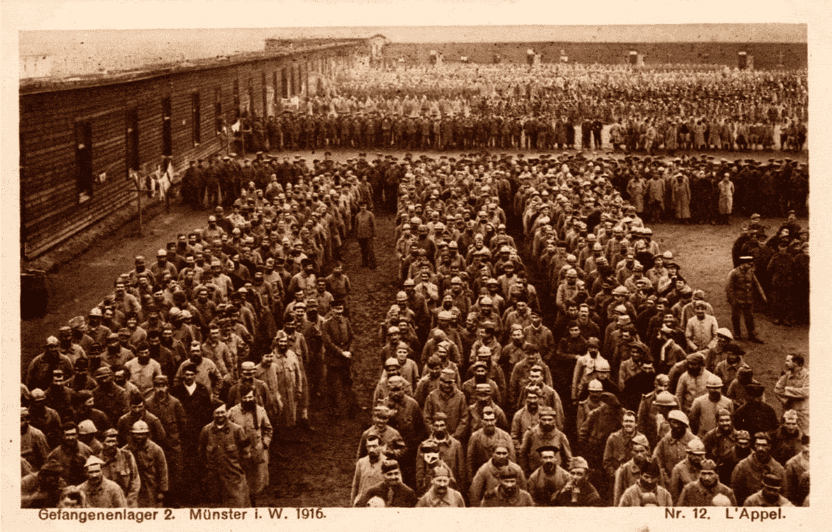
STERKRADE → MÜNSTER II STRAFE PRISON
The Münster II POW camp, where Cox was confined in a dark, overcrowded punishment cell.
Cox and Corporal Richards were held with ~200 men in a lice‑infested, unventilated room.
July 1915 – April 1916

VINTER MOOR
Moorland terrain near Vinter Moor, where Cox dug drainage trenches.
Cox described Vinter Moor as “the worst place I was in Germany.”
April – June 1916
AHLHORN
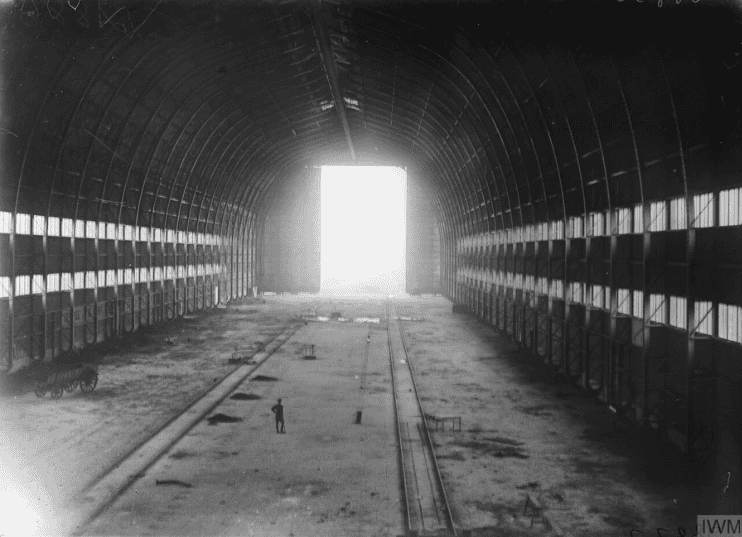
Inside the Zeppelin construction sheds at Ahlhorn, 1915.
Guards charged POWs with bayonets when they refused to work on Zeppelin production.
June – September 1916
Celle
Cox’s health collapsed; he spent most of this period in hospital.
September 1916 – March 1917
Soltau
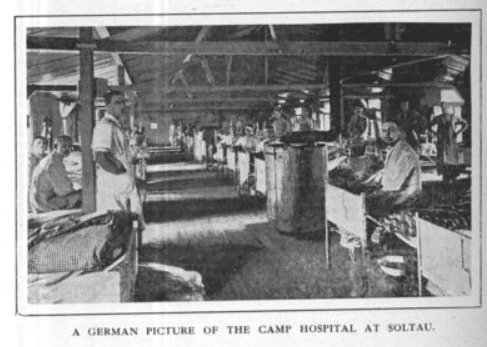
Soltau camp hospital, 1915.
March – July 1917
STUTTGART
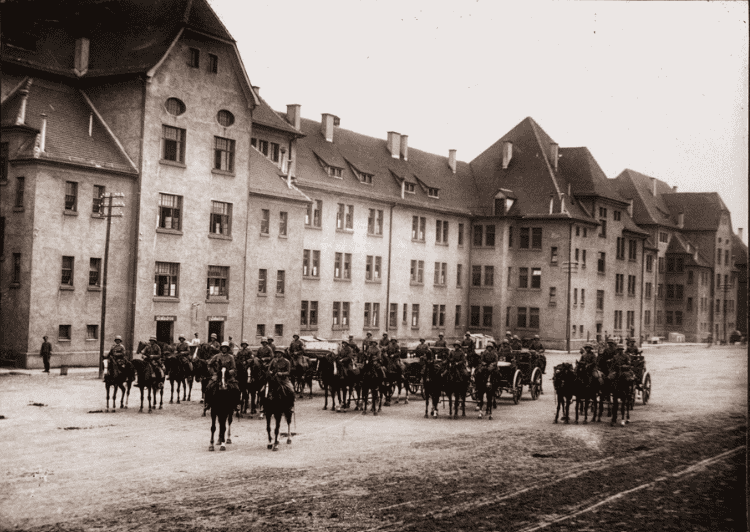
Stuttgart military barracks, early 20th century.
Cox described Stuttgart as having the strictest discipline of any camp.
July 1917 – May 1918
WEISSENAU BEI HAVELBERG
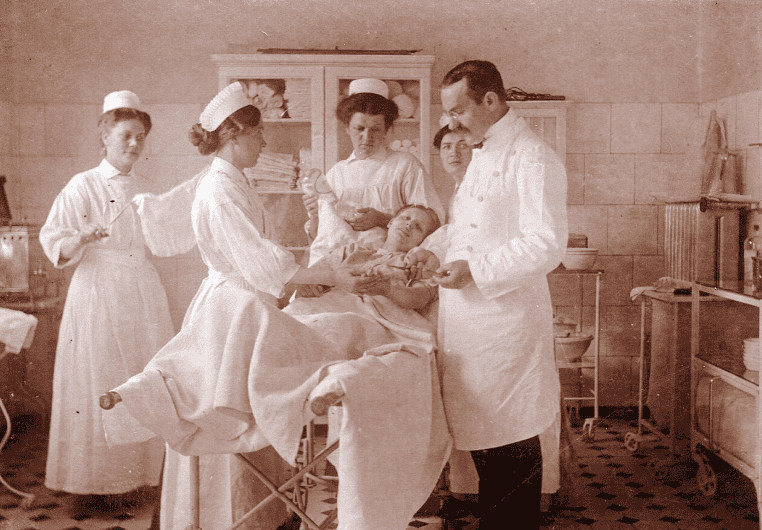
Representative image of a German Heilanstalt (psychiatric institution).
Cox was placed among German shell‑shock and mental‑health patients.
The following is an account given by Pte A Cox about his time as a prisoner of war.
Place and Date of Capture: Between Lille and Ypres, 20th October 1914.
Nature of Wound, if any: None.
Göttingen. Oct. 1914 – June 1915. I was first sent to Göttingen until June 1915. There were several hundreds of us at Göttingen camp put to work in the stone quarries. They were very brutal to us. One man was shot dead by a sentry for refusing to work because he was sick, and for something he said to the sentry which I could not hear.
Sterkrade. June – July 1915. At Sterkrade I refused to work in the munition factory—30 of us refused—and they ultimately sent two of us to Munster II. Strafe prison—Corporal Richards (of the Scots Guards, now interned in Holland,) and myself.
Münster II. July 1915. Here we two men were put into a small, very dark and wholly unventilated room, with possibly 200 other men of all nations (Russians, Belgians, etc.), also imprisoned for various offences. We were packed as close as sardines, and we were all crawling with lice.
There was one pail in the middle of the floor for latrine purposes for the whole 200 of us, and the urine ran all over the room, which stank unbearably. The authorities never cleaned it out in any way the 14 days I was there. Our food (other than bread) was thrown to us to scramble for; this only consisted of a few raw fish occasionally. The bread was served out to each of us, but it was only just enough to keep us alive, and very bad to eat.
Some of the men had been there for months.
We were never allowed out of this room during the whole 14 days I was there. Once we were all taken out to be fumigated for lice, etc., but we got just as bad again directly, as the whole place was crawling with insects of all sorts.
Vinter Moor. July 1915 – April 1916. From Munster II. prison I was sent to Vinter Moor prison camp, which was quite the worst place I was in in Germany. I was here eight or nine months.
There were hundreds of us here of all nations. Corporal Richards was also there with me.
We were put to work digging drainage trenches on the moors. We were housed in two long barracks, the Russians occupying one barrack by themselves.
The huts were very bad indeed. We had to sleep on the ground in water every night, and the roofs leaked. Our bedding was of leather, which was always damp.
Food very bad indeed. After leaving Münster prison the authorities told me and Corporal Richards that we should not be allowed to receive any parcels or letters for a long time, and we got no parcels for three months after that, when a lot of parcels of food, etc., were given us altogether.
The guards kept us working in the snow-storms during the winter of 1915, until we rioted, when they finally allowed us to go back to camp; but they picked out the men they thought were the ringleaders, and sent them out to work in the snow all the time under strong guards Many men went very sick, but they sent you out just the same if you could stand up.
Ahlhorn. April – June 1916. At Ahlhorn the conditions also were very bad indeed.
We all refused to work in the Zeppelin Works there, and the officer in charge, after trying in vain to get us to consent to work, called out the guard with fixed bayonets, and gave them an order in German to charge us, and then they went for us with their bayonets, and the officers with their swords, and many of us were badly hurt with the bayonets and swords.
They chased us all over the place. Eventually we were put to work on agriculture, which I did until I was sent to Celle lager as an invalid.
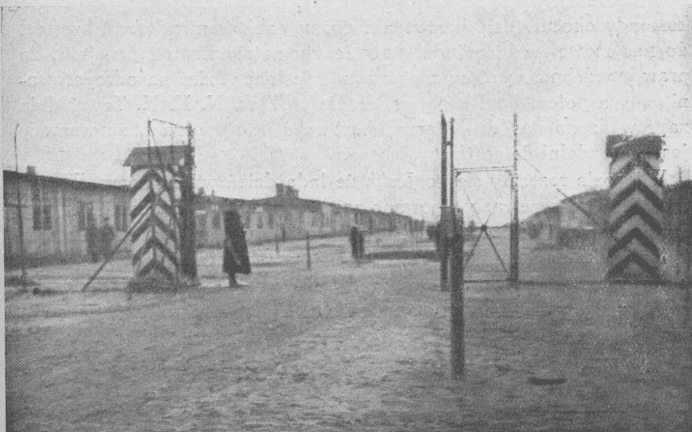
Celle. June – Sept. 1916. I was a very sick man at this time; my nerves were quite broken down, and at Celle lager and Soltau I was attending hospital all the time.
Soltau. Sept. 1916 – March 1917. The rest of the men at Soltau had literally a hell of a time. The Russians had five or six funerals every day during that winter (1916), of starvation; also the Belgian civilian camp there was always having funerals, they were starving, and if they were caught taking food we gave them (we always gave them what we could from our parcels) they were badly beaten by their German guards.
The Belgians were being deliberately starved there in order to force them to work for the Germans, which they refused to do.
Stuttgart. March – July 1917. I have nothing particular to say about the Stuttgart camp, except that the discipline there was the most severe I experienced in Germany, but I was very ill all the time I was there, and so escaped the worst of it.
Weissenau. July 1917 – May 1918. I went to Weissenau bei Havelsberg in July 1917, and was placed in the “Heilanstalt,” a sort of asylum for German shell shock and mental cases.
I had a terrible time there, as I was the only enemy prisoner there until private Hardwick (of the Middlesex Regiment) came.
The doctor there was very good, and would not allow any brutality, otherwise I should have been far worse off, but the mental strain on me among all those German ruffians was very severe.
I simply cannot go into the details of what I went through in Munster prison and Weissenau, the memory of it all is so painful, and makes me so sick to think of it in any way, I simply cannot bear to think of it more than I possibly can.
Final Statement. My troubles, no doubt, arose chiefly because I and the other men refused to work at munitions and Zeppelins, etc., but I am very glad and proud to feel that, in spite of all, I utterly declined, from first to last, to work for them at Zeppelins or munitions or other war work.
Opinion of Examiner: I have every reason to believe the above statement to be perfectly reliable in every way.
RALPH W. FLOWER, 11 May 1918