All timeline stories.

Keeping the Peace 1945-48

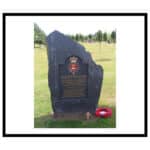
Keeping the Peace The Second World War had ended, however, the 4th Hussars did not go home for two and a half years after the enemy had surrendered and by the end of May 1945 had moved up into Austria near the Yugoslav border. Austria, unscathed by war, was a pleasant contrast to the ruin of Italy and the Austrians soon realised that the British Army did not come as conquerors. Everyone was busy with the vast human problems thrown…

0
Read More
The Second World War 1939-45

The Second World War During the Second World War the 4th Hussars were seemingly destroyed, time after time, only to rise phoenix-like from the ashes to find their next enemy. From 1941 they were under the watchful eye of their Colonel of the Regiment, Winston Churchill who certainly helped to guide their fate. They initially fought in Greece but withdrew in the face of a numerically superior German force sent to pacify the region. Greece 1941 Germany invaded Yugoslavia and…

0
Read More

The Inter-War Years

The Inter-War Years The 4th Hussars departed for India in 1921 for a total of nine years. The first station was in Muttra, followed by three and half years at Lucknow, and finally three years at Meerut. Life was very pleasant in India, a well-deserved rest after the ardours of The Western Front, the last of the old way of life, with the horse still the main characteristic of service life. The 4th Hussars embarked on the Nevasa, which was…

0
Read More

The Great War 1914-18

The Great War On the outbreak of the Great War, the regiment was stationed at the Curragh, Ireland. It embarked on the 15th of August 1914 at Dublin, under the Command of Lieutenant Colonel I.G Hogg DSO, and disembarked at Le Havre, France on the 18th of August. During the same evening, it entrained and the following day detained at Maubeuge, about 10 miles south of Mons. The regiment belonged to the 3rd Cavalry Brigade which comprised the 4th Hussars,…

0
Read More

Home and Imperial Service 1856-1914

The 4th now entered a period of Home and Imperial service, including India 1867-78, until the outbreak of the Great War. In 1861 they became The 4th (Queens Own) Hussars. It was at this time that Winston Churchill served in the 4th Hussars. He became Colonel of the Regiment during the last World War and remained so until his death.

0
Read More

The Crimean War 1854-56

The Crimean War This, the most destructive of the Victorian era, was notable for the appalling suffering of the troops, the outmoded and inefficient military organisation and the recognition at last of the courage of all ranks of soldiers and sailors with the instigation of the Victoria Cross. It is remembered for the unreasoning courage of the Charge of the Light Brigade, for the precise volleys of the Thin Red Line and for the impossible assaults upon Sevastopol’s Redan. It…

0
Read More

India 1821-41

India The 4th (Queen’s Own) Light Dragoons spent some time in Ireland before sailing for their first tour in India in 1821. For seventeen years they remained peacefully in the easy soldiering routine of India, stationed at Kaira and Kirkee until two squadrons were called upon to join the Bombay column marching to Kabul. Ghuznee 23 July 1839 In 1839 the first fighting was done storming the defended fortress of Ghuznee in which the 4th was ready should they be…

0
Read More

The Peninsular War 1808-14

The Peninsular War Finally, in December 1808 the 4th sailed to Portugal to join Wellesley’s Army which was trying to push the French out of Portugal by bringing them to battle in Spain. They achieved this at Talavera in July 1809. Talavera 28 July 1809 The 4th Queen’s Own Dragoons were present at the battle of Talavera, but the action was in effect a slogging match between the infantry forces. Fane’s Brigade, which contained the 4th, were ordered to charge…

0
Read More

Home Service 1748-1808

Home Service In 1748 Rich’s Dragoons returned home for sixty years of quiet home service. The names of regiments were enumerated in 1751 thus Rich’s became the 4th Dragoons. Their coats remained scarlet and their waistcoats and breeches were to be green. The civil order which erupted into the Gordon Riots of 1780 called the 4th Dragoons to London for their first trial in the use of minimum force and eight years later, in 1788, saw another re-organisation of cavalry,…

0
Read More

The Battle of Dettingen 1743

The Battle of Dettingen In 1742 the War of Austria succession started and Rich’s Dragoons went into battle the following year at Dettingen. Their third charge drove back the French and turned the battle in favour of the British while George Daraugh, a Dragoon from the 4th, won the Regiment and himself great fame. He saw a French Officer riding off with a Regimental Standard, and followed him, cut him down and returned to the Regiment with the Standard. He…

0
Read More
Contact Information
QRH Museum
Trinity Mews
Priory Road
Warwick CV34 4NA

Telephone:

01926 506226
SOCIAL MEDIA
LATEST POSTS